The Best Homeschool ESL Curriculum & English Learning Resources in 2026
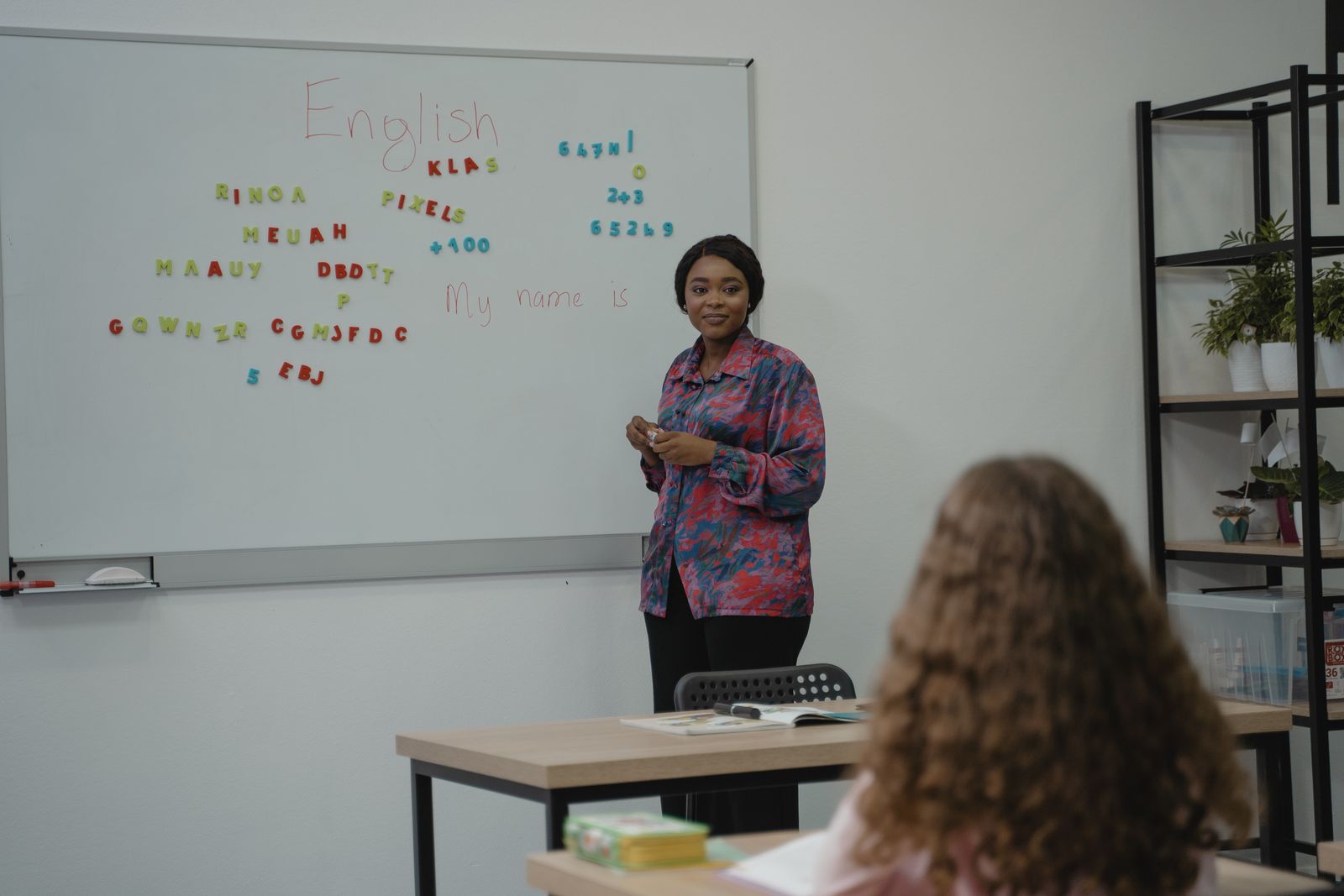
ESL is the subject most homeschool curriculum guides quietly skip. The big roundups assume a family that already speaks English at home and needs help with grammar or spelling. That leaves out a large and growing group: immigrant and expat families homeschooling in a new country, bilingual households raising children in two languages at once, international families who want their children reading and writing English at grade level, and adults who are learning English themselves while teaching their kids everything else.
If that is you, the good news is that English as a second language is one of the best served subjects on the open web. The bad news is that almost all of it was built for a classroom, a language school, or a solo adult learner, and very little of it was designed for a parent at a kitchen table. This guide sorts through what actually works at home, organized by who is learning and at what level, with an honest split between the free material that is good enough to build a year on and the paid programs worth the money.
First, Decide Which Problem You Are Solving
"ESL" covers at least four different situations, and the right resource for one is close to useless for another. Before you spend anything, work out which of these describes your household.
Want the full checklist for this grade?
We put together a complete K-12 curriculum planner with every subject milestone, matched to your teaching style.
Grab it free →A young child acquiring English alongside a home language. Under about age seven, children pick up a second language mostly through exposure and play, not instruction. What you need here is volume of comfortable input, songs, and repetition, not a grammar syllabus. This is the easiest case and the cheapest.
An older child or teen who arrived with little English. This is the hardest case and the one most guides ignore. The child needs to learn English while also keeping up in math, science, and history, which are themselves being taught in English. You will need structured, leveled instruction plus a lot of patience about content subjects for the first year.
A child who speaks English fluently but reads and writes below grade level. Very common in bilingual households. Conversational fluency arrives long before academic literacy does. These children usually do not need ESL material at all. They need phonics and reading and writing instruction aimed at their actual reading level, which may be several grades below their age.
An adult learning or improving English. Often the parent. This has its own set of resources, including a substantial free university catalog, and it deserves to be treated as its own course rather than squeezed into the children's schedule.
The most common and most expensive mistake is putting a case three child through a case two program. A ten year old who chats happily in English but writes like a six year old will be bored and insulted by beginner ESL video lessons, and will make faster progress with ordinary language arts material pitched at their reading level.
Preschool and Early Elementary: Exposure Over Instruction
For the youngest learners, the research is consistent and a little deflating for anyone hoping to buy a curriculum: comprehensible input, delivered often and pleasantly, beats formal teaching. Your budget here should be near zero.
MUZZY English For Kids from the BBC is the most durable thing in this category. It is an animated story series built specifically for language acquisition, using the same vocabulary repeatedly across episodes so children absorb structure without being taught it. It has been around for decades because the method works. At around ten dollars it is one of the few paid items at this age that is easy to justify.
For free video, the Busy Beavers Level 1 beginner series is genuinely good. It is bright, repetitive, and song heavy, which is exactly right for this age even though it will drive adults slightly mad. The sequence continues through Level 2 and Level 3, which together make a coherent multi-year path at no cost. Treat it as your spine and add books.
Beelinguapp deserves a mention here even though it suits older learners too. It shows the same text side by side in English and the home language, which lets a child read a real story slightly above their English level without stalling every sentence. It supports a wide range of languages including Spanish, Mandarin, Arabic, and Portuguese, and the free tier is usable.
If your child is also at the stage of learning letters and sounds, run English phonics in parallel rather than waiting for spoken fluency. Our preschool and kindergarten guide covers the options, and nearly all of them work fine for a second language learner.
Elementary and Middle: Structured Programs That Hold Up at Home
Once a child needs to actually progress through levels rather than simply soak up language, you want something with a sequence, a way to check what has been learned, and enough material to fill a year.
EducationCity's Learn English (as a Second Language) is the most classroom-like of the options, which in this case is a strength. It is leveled, it tracks progress, and it does not assume a teacher is standing there filling gaps. At around ninety dollars it is a real curriculum purchase rather than a supplement.
Progress to Success from Perfection Learning is aimed squarely at the case two learner: an older student who needs to build academic English quickly, not just conversational English. It is inexpensive at around fourteen dollars per book and is written for students who are behind and know it, which matters more than it sounds. Material that treats a twelve year old like a five year old is abandoned within a week.
American School's online ESL course is worth knowing about if you need something accredited that will appear on a transcript. It is the most expensive option in this section at around a hundred and fifty dollars, and the trade you are making is flexibility for paper credentials. If nobody is going to ask for a transcript, skip it.
Cudoo's English Language Courses sit at the other end, around thirteen dollars, and are best understood as structured practice rather than a full curriculum. Useful as a second track alongside something more substantial.
For daily practice that costs nothing, three sites carry most of the load. UsingEnglish.com is a deep reference and quiz library covering grammar, idioms, and phrasal verbs, and it is the one to bookmark for "why does English do this" questions. BusyTeacher.org has an enormous free printable worksheet archive built by ESL teachers, including its dedicated free grammar worksheets collection. And 5 Minute English does what the name says: short, self-contained lessons on one point at a time, which is the right size for a child who is already spending most of the day working in a second language.
Word Practice: ESL Grammar Games and Spaceteam ESL are both free and both solve the motivation problem rather than the instruction problem. Spaceteam ESL in particular is a cooperative shouting game built by researchers at Concordia University to force fast reading and speaking under pressure, and it works unreasonably well with siblings or a co-op group.
If reading comprehension specifically is the bottleneck, Comprendi from Dr. Marion's Learning Lab is free and targets comprehension directly rather than vocabulary or grammar. For a child whose spoken English has outrun their reading, that is usually the right lever.
Books Worth Owning
Screens are excellent for input and terrible for review. A short shelf of print does the work no video can.
English Made Easy Volume One teaches through pictures rather than translation, which means it works regardless of the home language and can be handed to a child who cannot yet read instructions in English. At around thirteen dollars it is the single best first purchase for a genuine beginner of any age.
For a full self-study course in book form, DK's English for Everyone Course Book Level 1 is the strongest option. Every grammar point is introduced through a diagram before any rule is stated, so a learner who cannot yet read an English explanation can still follow the page. Buy it together with the matching Level 1 Practice Book, which carries the written drill the course book deliberately leaves out and includes an answer key. The pair is genuinely usable without a teacher, which matters in households where the parent is learning too.
If there are two of you to work with, Side by Side Student Book 1 is built differently and better for that case. Every unit is a short dialogue that two people read, adapt, and then perform, with the grammar taught through the conversation rather than before it. Almost all ESL material assumes a solo learner or a full classroom; this one assumes exactly a kitchen table with a parent and a child at it. It collapses into ordinary reading practice if nobody is available to be the second voice.
For vocabulary, the Oxford Picture Dictionary is the classroom standard for good reason. Roughly four thousand words organized by situation rather than alphabetically, so every word you need at a doctor's office or a hardware store sits on one illustrated spread. It is a reference rather than a course, and it fills the gap structured programs consistently leave, which is breadth of concrete everyday vocabulary. If your child is starting school subjects in English, the Content Areas for Kids edition covers the academic terms (habitat, denominator, peninsula) that general ESL material never touches, with Spanish translations alongside. That is the vocabulary that decides whether a child can follow a science lesson, and it is separate from conversational fluency.
For grammar reference there are two standards and you only need one. Essential Grammar in Use from Cambridge uses a strict two-page unit format, explanation on the left and exercises on the right, indexed by problem rather than syllabus order, so a confused learner can go straight to the present perfect and stop there. Examples are British English throughout. The Azar-Hagen Basic English Grammar Workbook is the American counterpart and the book most TESOL training programs assign. It is more expensive at around forty dollars and considerably drier, but its sequence has been refined across five editions and it is more complete. Both include answer keys, which is what makes either workable for a parent who is not a trained English teacher. If you simply need more drill alongside a course you already like, Practice Makes Perfect: Exploring Grammar is the cheap way to add it.
English the American Way covers the part no grammar book does: idioms, slang, small talk, and the cultural context that makes a fluent speaker sound fluent. It is aimed at teens and adults and pairs well with a structured course. For an older student whose spoken English is fine but whose academic vocabulary is holding them back, Word Power Made Easy teaches Greek and Latin roots rather than word lists, so each session unlocks a family of words at once. It is a high school and adult book, and it is the standard preparation text for the SAT and GRE.
One specialized note. If a child's difficulty is producing specific English sounds rather than understanding the language, that is articulation, not ESL, and general programs will not touch it. Articulation Station Pro from Little Bee Speech is the standard tool, around sixty dollars, and is used by speech language pathologists. Our special needs guide covers the wider picture if you suspect something beyond second language interference.
High School and Adults: The Free University Catalog
This is where ESL gets unusually generous. A large amount of genuinely high quality university instruction is free to audit, and almost none of it is on the radar of homeschool families.
The University of Washington's Business English: Networking and Business English: Planning & Negotiating are free and pitched at the level of an adult who can already hold a conversation but needs professional register. The Hong Kong University of Science and Technology offers a full free sequence: Business English: Basics, English for Effective Business Writing, English for Effective Business Speaking, and Business English for Cross-cultural Communication. The University of Pennsylvania's English for Business and Entrepreneurship rounds it out, and Build English Skills for Business is a shorter free option.
Taken together that is well over a hundred hours of free, structured, university-taught English on the business English track alone. For a high school student who already has functional English, working through two or three of these is a defensible elective credit and looks considerably better on an application than another year of generic ESL. Our electives guide covers how to count that kind of work.
For a paid option with more support, Business English Pod at around ninety dollars is podcast-based and built for people practicing during a commute, which suits an adult learner fitting study around a homeschool day.
Rosetta Stone is the obvious name and the most expensive at around two hundred dollars. It is worth it for a motivated adult who wants a single structured path and will actually use it daily. It is usually not worth it for a child, who will get further with free video and books plus a parent talking to them. The same reasoning applies across our foreign language guide, which is the companion to this one if you are teaching a language other than English.
Learn English with Rebecca is free, aimed at adults and older teens, and is the best of the YouTube-style channels for people who want clear explanations of things like tenses and pronunciation without a syllabus attached.
If You Are the One Doing the Teaching
Homeschool parents teaching English to their own children are, functionally, ESL teachers, and the training material for that job is free and good.
Arizona State University's Teach English Now! sequence is the most complete option. Foundational Principles and Lesson Design and Assessment are both free to audit, and if you want the credential the TESOL Certificate, Part 1 is around forty nine dollars. The same university also offers ELL Success in the Content Classroom and Engaging ELLs and Their Families, both free, both about the harder problem of teaching math and science to a student still learning the language of instruction.
The British Council's English Language Teaching Program is free and is the other major authority in this space. Teacher's Zone is a free lesson idea and activity library, useful when you have the theory and need something to do on Tuesday morning. English for Teaching Purposes from Universitat Autònoma de Barcelona is free and aimed at people who will be teaching content in English rather than teaching English itself, which is precisely the homeschool parent's situation.
If you want a book rather than a course, Learning Teaching: The Essential Guide to English Language Teaching is the standard text, around forty five dollars, and is what most teacher training programs assign. For anyone considering turning this into paid work, MyTEFL's Online TEFL Course at around a hundred and thirty nine dollars is the usual route to a recognized certificate. Browse the full teaching English as a second language and teaching English collections for more.
Building an Actual Year
A workable ESL year for an elementary or middle school child, at zero cost, looks like this. Busy Beavers or MUZZY as daily input, twenty to thirty minutes. BusyTeacher worksheets two or three times a week for written practice. 5 Minute English as a short daily lesson once reading has started. Beelinguapp for independent reading in the evening. One game session a week, Spaceteam ESL or Word Practice, ideally with someone else. That is roughly an hour a day and it is a real program.
Add a paid spine if you want the reassurance of a sequence someone else designed, and EducationCity or Progress to Success are the two to look at depending on the child's age.
Two scheduling notes that matter more than the resource choice. First, do content subjects in the home language for the first year if you can. A child learning English does not also need to learn fractions in English, and doing both at once usually means learning neither. Second, protect reading aloud. Twenty minutes a day of an adult reading English to a child, well above the level the child could read alone, does more for vocabulary and sentence structure than any worksheet.
For everything else that goes into planning a year, our beginner's guide to homeschooling and the free resources roundup are the places to start. If you are eventually heading toward standardized testing, the test prep guide covers what English learners typically need extra time on. And if you would rather buy one box that covers every subject, the all-in-one curriculum guide lists the programs that handle language support reasonably well.
Browse the full ESL collection, the wider English catalog, and our vocabulary and reading topics to build the rest of your year.
Learnamic Weekly Picks
Get handpicked learning resources, curriculum comparisons, and money-saving finds delivered to your inbox every week. Join thousands of homeschool families.
No spam, ever. Unsubscribe anytime.