The Best Homeschool Curriculum for Special Needs & Learning Differences in 2026
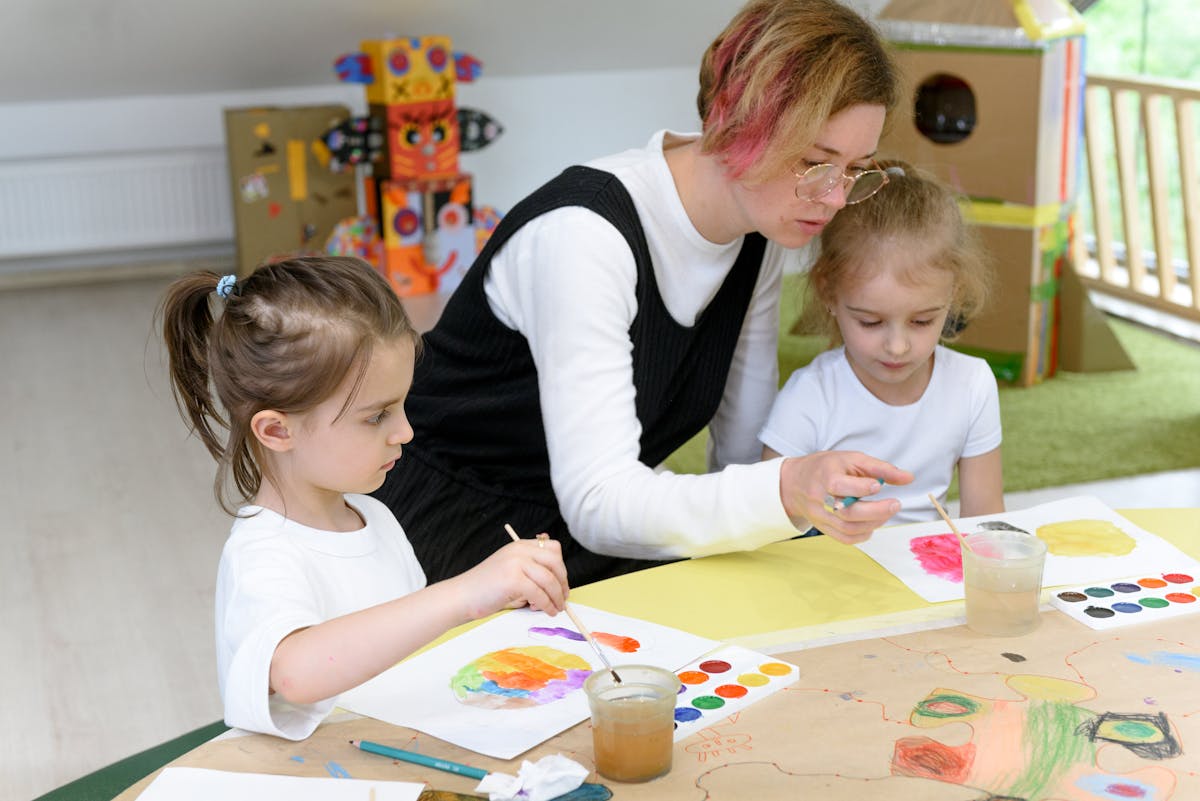
One of the most powerful reasons families choose homeschooling is the ability to tailor education to a child's unique needs. For children with learning differences — whether dyslexia, ADHD, autism spectrum disorder, giftedness, or any combination — a one-size-fits-all classroom can be frustrating and demoralizing. At home, you can adjust pacing, choose multisensory materials, build in movement breaks, and meet your child exactly where they are.
This guide covers the best homeschool resources for children with special needs and learning differences in 2026, organized by learning profile. Many of these programs are recommended by special education professionals and used successfully by thousands of homeschool families. Whether your child has a formal diagnosis or you simply notice they learn differently, these tools can help.
Why Homeschooling Works for Special Needs Learners
Traditional classrooms serve 20-30 students with one teacher. Even the best educators struggle to differentiate instruction for every learning profile. Homeschooling flips this equation entirely: one teacher, one student, unlimited flexibility. You can spend three weeks on a concept that needs reinforcement or skip ahead when your child has already mastered something. You can schedule math during your child's peak focus window, build in sensory breaks, use manipulatives for every lesson, or let your child stand at a whiteboard instead of sitting at a desk.
Overwhelmed by all the options?
We built a grade-by-grade planner that shows you exactly what to cover — and which resources match your style.
Download the planner →Research consistently shows that children with learning differences thrive with individualized instruction. Homeschooling isn't just an alternative — for many special needs families, it's the optimal learning environment. If you're just getting started, our complete guide to starting homeschooling in 2026 covers the basics of legal requirements, curriculum planning, and daily scheduling.
At a glance
Every option below is listed in the Learnamic directory, and the grade range, format and price come straight from that listing. We only include programs whose links we currently show as working. Prices last checked August 27, 2026 and are the publisher's list price in US dollars.
| Program | Grades | Format | Price | Best for |
|---|---|---|---|---|
| All About ReadingAll About Learning Press | Pre-K - 8th | Product, Book | $79.95 | Multisensory, mastery-paced reading for dyslexia |
| All About Spelling | Homeschool Spelling CurriculumAll About Learning Press | Kindergarten - 7th | Product, Book | $29.95 | Multisensory spelling that moves at the child's pace |
| Jolly Phonics DVDJolly Phonics | Pre-K - 1st | DVD | $37.50 | Synthetic phonics with song and movement cues |
| Reading EggsEdmentum | Pre-K - 2nd | Online resource | $59 | Short, gamified reading sessions for shorter attention spans |
| Starfall MathStarfall | 1st | Website | Free | Free, low-pressure early math with heavy repetition |
| Math BingoABCya | Kindergarten - 4th | iPhone/iPad | $2.99 (Free) | Cheap, short math-fact practice in game form |
| BrainPOP Jr. at HomeBrainPOP | Kindergarten - 3rd | Website | $14.95/mo (Free Trial) | Short animated lessons for K-3 who tire of text |
| BrainPOP at HomeBrainPOP | 3rd-8th | Website, iPhone/iPad | $15.95/mo (Free Trial) | The same short-lesson format for older elementary |
| Osmo Detective AgencyOsmo | Kindergarten - 3rd | Game, iPhone/iPad App, +1 more | Free | Free hands-on screen-plus-manipulative play |
| Osmo Pizza CoOsmo | Kindergarten - 3rd | Game, iPhone/iPad App, +1 more | $39.99 | Hands-on money and fractions practice for K-3 |
| Programming Course ACode.org | Pre-K - 2nd | Website | Free | Free, wordless early coding for pre-readers |
| Pre-reader ExpressCode.org | Pre-K - 3rd | Online class | Free | A free coding path that needs no reading ability |
| Epic!Epic! | Pre-K - 7th | Kindle/ebook, Website | $7.99/mo (Free Trial) | A large audiobook and read-to-me library for reluctant readers |
| ADHD: Everyday Strategies for Elementary StudentsThe State University of New York, The University at Buffalo | College | Online class | Free | Free training for the PARENT, not the child |
| Autism Spectrum DisorderUniversity of California, Davis | College | Online class | Free | Free university course to ground your own approach |
Dyslexia & Reading Difficulties
Dyslexia affects roughly 1 in 5 people, making it the most common learning difference. Children with dyslexia need structured, systematic, multisensory reading instruction — often called Orton-Gillingham (OG) based approaches. The good news: several excellent homeschool curricula use these methods, and they work remarkably well when delivered one-on-one.
All About Reading from All About Learning Press is widely considered the gold standard for teaching reading to children with dyslexia. It uses a multisensory, mastery-based approach with letter tiles, phonogram cards, and fluency practice built into every lesson. Each level is scripted so you don't need specialized training — just open the book and teach. Paired with All About Spelling, it provides a complete language arts foundation for struggling readers.
Explode The Code is another popular choice for phonics-based reading instruction. Its workbook format provides systematic, sequential phonics practice that builds from simple consonant-vowel combinations to complex words. It's particularly effective for children who benefit from lots of repetition and practice.
Reading Eggs from Edmentum takes a digital, game-based approach to reading instruction. Its adaptive technology adjusts difficulty based on performance, which means your child is always working at the right level. The colorful animations and reward systems help keep struggling readers motivated — something that's often half the battle with dyslexia.
For younger children just beginning their reading journey, Jolly Phonics uses songs, actions, and stories to teach the 42 main sounds of English. Its multisensory approach — children see the letter, hear the sound, sing the song, and do the action — is especially effective for children who need multiple pathways into learning. See more reading resources in our language arts curriculum guide and browse all reading resources and phonics resources on Learnamic.
ADHD & Executive Function Challenges
Children with ADHD often have the intelligence and curiosity to excel academically — they just need the right structure and delivery method. Short lessons, interactive formats, immediate feedback, and built-in movement breaks make a world of difference. Homeschooling gives you the freedom to work with your child's attention patterns rather than against them.
Teaching Textbooks is a favorite among ADHD homeschool families for math. Lessons are delivered via short, engaging video tutorials, and the program is entirely self-paced. If your child needs to pause, rewind, or take a break mid-lesson, they can — without falling behind the class. It covers Math 3 through Pre-Calculus, making it a curriculum you can stick with for years.
Khan Academy offers free, self-paced learning across every subject. Its mastery-based approach means your child can watch a video as many times as needed, practice with instant feedback, and move on only when they're ready. For ADHD learners, the bite-sized video format (typically 5-15 minutes) aligns perfectly with shorter attention spans.
IXL provides adaptive practice across math, language arts, science, and social studies. Each skill adjusts difficulty in real time, and the immediate scoring and awards system provides the dopamine feedback that ADHD brains often need to stay engaged. Its diagnostic tools also help you identify specific gaps without lengthy assessments.
Don't underestimate the importance of movement breaks. GoNoodle offers short, guided movement and mindfulness activities that can serve as brain breaks between subjects. Many ADHD homeschool families schedule 5-10 minute GoNoodle sessions between lessons, which research shows can significantly improve focus and retention. For more on integrating physical activity, see our PE & health curriculum guide.
BrainPOP is another excellent tool for ADHD learners. Its animated videos cover hundreds of topics across science, math, English, social studies, and more. Each video is short (3-5 minutes), visually engaging, and followed by quizzes and activities. The variety keeps things fresh, which is crucial for children who bore easily.
Autism Spectrum
Children on the autism spectrum often thrive with predictable routines, visual supports, clear expectations, and the ability to deep-dive into topics of interest. Homeschooling naturally accommodates all of these needs. Many autistic children are also highly visual learners, making visual and interactive curricula particularly effective.
BrainPOP at Home works well for autistic learners because of its consistent format: every topic follows the same structure (video, quiz, activities). This predictability reduces anxiety about what's coming next. The animated characters provide social cues in a low-pressure format, and BrainPOP Jr. covers the same subjects for younger children (K-3).
ABCya offers hundreds of educational games organized by grade level, from preschool through 5th grade. The game-based format can be particularly motivating for autistic children, and the site's clean, consistent interface avoids overwhelming sensory input. ABCya covers math, reading, typing, and problem-solving skills.
Osmo bridges the physical and digital worlds with hands-on learning games that use a tablet's camera to interact with physical manipulatives. Osmo Pizza Co. teaches math through running a pizza business, and Osmo Detective Agency builds geography skills through investigation. The tactile component is especially valuable for children who benefit from hands-on learning.
For coding and computer science, Code.org offers highly structured, visual programming courses. The Pre-reader Express course uses drag-and-drop blocks that require no reading, while Course A and the Express Course progress through increasingly complex challenges. Many autistic children excel at the logical, pattern-based thinking that coding requires. Browse more options in our CS & coding curriculum guide.
Gifted & Twice-Exceptional (2e) Learners
Twice-exceptional children — those who are gifted but also have a learning disability, ADHD, autism, or another exceptionality — present a unique challenge. They need advanced content in their areas of strength while receiving support in areas of difficulty. Traditional schools rarely handle this well; homeschooling is often the only practical way to serve both needs simultaneously.
Khan Academy is invaluable for 2e learners because there are no grade-level gates. A child who reads at a 2nd-grade level but thinks mathematically at a 7th-grade level can study exactly that combination. The platform's progress tracking helps you monitor mastery across subjects, and its content extends all the way to calculus and college-level courses.
CK-12 offers free, customizable textbooks and adaptive practice for middle and high school subjects. You can assemble a custom FlexBook by selecting chapters across grade levels, which is perfect for 2e students who are working at different levels in different subjects. Its physics, chemistry, biology, and math content is particularly strong. See our science curriculum guide for more advanced options.
For truly advanced learners, OpenStax provides free, peer-reviewed college textbooks in math, science, social science, and humanities. These are the same textbooks used at universities, available free online or at low cost in print. They're ideal for high schoolers ready for college-level work.
Epic! is a digital library with over 40,000 books, audiobooks, and educational videos. For gifted readers who devour books faster than you can buy them, Epic!'s unlimited access is a game-changer. The Read-To-Me feature also supports struggling readers who comprehend above their decoding level — a classic 2e pattern.
Dyscalculia & Math Difficulties
Dyscalculia — difficulty with numbers and mathematical reasoning — is less well-known than dyslexia but equally common. Children with dyscalculia need concrete, visual representations of mathematical concepts, plenty of hands-on practice, and the freedom to move at their own pace.
Math-U-See is the most frequently recommended math curriculum for children with dyscalculia. It uses colored manipulative blocks to represent place value and operations, making abstract concepts concrete and visible. The program progresses from Primer (counting, writing numerals) through Calculus, with each level building systematically on the last. The mastery-based approach means your child doesn't move on until they truly understand each concept. See more math options in our math curriculum guide.
Teaching Textbooks also works well for math-anxious students because of its gentle, encouraging approach. The animated instructor explains each concept step by step, and if a student gets a problem wrong, the program shows a worked solution. This reduces the frustration and emotional overwhelm that many dyscalculic children experience with math.
IXL supplements any math curriculum with unlimited adaptive practice. Its real-time difficulty adjustment ensures your child is never overwhelmed with problems that are too hard or bored with problems that are too easy. The visual progress tracking helps children see their improvement over time, building confidence alongside skills.
For hands-on math reinforcement, Brain Quest workbooks provide structured, grade-level practice with a fun, engaging format. The Kindergarten through Grade 2 editions are particularly useful for building foundational number sense. Kumon workbooks offer focused, incremental practice that builds fluency through repetition — helpful for children who need extra time to automatize basic math facts.
Dysgraphia & Writing Difficulties
Dysgraphia makes the physical act of writing painful and laborious, which can mask a child's true knowledge and creativity. Homeschooling accommodations include using speech-to-text technology, oral narration, keyboarding instead of handwriting, and adaptive writing tools.
For children who do need handwriting instruction, programs that use a multisensory approach tend to work best. Writing-focused resources on Learnamic include options ranging from simple copywork programs to comprehensive composition curricula. Consider starting with large-motor activities (writing in sand, tracing in shaving cream, air-writing) before progressing to pencil and paper.
When writing mechanics are the barrier, prioritize content over form. Let your child dictate essays, use a keyboard, or demonstrate knowledge through presentations, drawings, or recordings. Many homeschool families find that removing the handwriting requirement reveals a child who has plenty to say — they just need a different output method.
Free & Budget-Friendly Special Needs Resources
Special needs curricula can be expensive, but many excellent resources are free or low-cost. Here are the best options:
Khan Academy — completely free, covers K-12+ math, science, humanities, and computing. Self-paced with mastery tracking. No ads, no subscriptions.
Code.org — free computer science courses from pre-readers through high school. Highly visual and structured.
CK-12 — free adaptive textbooks, simulations, and practice for middle and high school. Customizable by topic and level.
Starfall — free and low-cost early reading and math activities. Clean interface, consistent format, excellent for K-2 learners.
GoNoodle — free movement and mindfulness activities for brain breaks.
BrainPOP — paid subscription but offers some free content, plus homeschool pricing is significantly discounted.
For a comprehensive list of free resources across every subject, see our guide to the 25 best free homeschool resources in 2026. Browse all resources by grade level, topic, or format on Learnamic to find the right fit for your child.
How to Choose the Right Curriculum for Your Child
Start with your child's learning profile, not a curriculum catalog. Consider: Does your child learn best through seeing, hearing, touching, or doing? Do they need short lessons or can they sustain focus for longer periods? Do they prefer structure and routine, or do they thrive with variety? Do they need mastery-based progression, or can they handle a spiral approach that revisits topics over time?
Next, be honest about your own capacity. Some curricula are teacher-intensive (you sit with your child for every lesson), while others are more independent (your child works through lessons on their own with you checking in). Neither is better — it depends on your family's needs, your child's age, and how many children you're teaching.
Most importantly, don't be afraid to mix and match. You might use Math-U-See for math (because your child needs manipulatives), All About Reading for reading (because they need an OG approach), BrainPOP for science and social studies (because they learn well from video), and Khan Academy for enrichment in areas of strength. Homeschooling gives you this freedom — use it.
Finally, connect with other special needs homeschool families. Online communities and local special needs homeschool co-ops can provide curriculum recommendations specific to your child's profile. Sometimes the best advice comes from a parent who's already walked the path you're on.
Ready to explore resources? Browse all special needs teaching resources on Learnamic, or filter by dyslexia, ADHD, autism spectrum, gifted education, or learning disabilities to find exactly what your child needs.
Frequently asked questions
What is the best homeschool curriculum for a child with autism?
There is no single answer, but the programs that work tend to share three traits: a predictable lesson structure that does not change shape week to week, short sessions, and mastery pacing so the child is never pushed forward before they are ready. All About Reading and All About Spelling are built this way, and free options such as Code.org's Course A work well because they are wordless and self-paced.
What works for a child with ADHD?
Short lessons and a change of physical state between them matter more than the brand on the cover. Programs that deliver content in five to ten minute pieces, such as BrainPOP's animated lessons, or that turn practice into a game, such as Math Bingo, hold attention better than a 45-minute worksheet block. Hands-on formats such as Osmo pair screen time with physical manipulation, which helps some children stay regulated.
What is a multisensory program and why does it matter for dyslexia?
Multisensory means the child sees, says, hears and physically manipulates the same material in one lesson, rather than only reading it. For dyslexia this is the mainstream recommendation because it builds more than one retrieval route to the same knowledge. All About Reading is the clearest example in our directory: letter tiles, spoken review and reading practice all target the same skill.
Can I homeschool a child who has an IEP?
In most US states, yes, though what happens to the IEP itself varies. Some states continue to offer services to homeschooled children through the local district, others do not, and the paperwork usually has to be restarted rather than carried over. Check your own state's rules before you withdraw, because the timing of the withdrawal can affect what services remain available.
Should I use grade-level or ability-level material?
Ability level, in almost every case, and it is normal for a child to sit at different levels in different subjects. The practical reason is that mastery-paced programs only work if the starting point is honest. Most of the programs below place by skill rather than by grade for exactly this reason.
Learnamic Weekly Picks
Get handpicked learning resources, curriculum comparisons, and money-saving finds delivered to your inbox every week. Join thousands of homeschool families.
No spam, ever. Unsubscribe anytime.