Phonics
What is Phonics?
Phonics is the approach to early reading that explicitly teaches which letters and letter combinations make which sounds, then has children blend those sounds to read words. A structured phonics scope walks through single letter sounds, short vowels, blends and digraphs (sh, ch, th), long vowels with silent e, vowel teams (ai, oa, ea), r-controlled vowels, and on through syllable types and prefixes/suffixes. It is the core of what is now called the science of reading.
For homeschoolers this is the make-or-break of K and 1st grade. The well-known programs — All About Reading, Logic of English, Reading Lessons Through Literature, Saxon Phonics, Pride Reading, Open Court — differ in pacing and presentation but cover roughly the same scope. A child who finishes a solid phonics program around age 7 or 8 is ready to read for content; a child who skips this step often spends years compensating with guessing and memorization.
How to Learn Phonics
Short, daily, consistent. Fifteen to twenty minutes a day, five days a week, beats an hour twice a week. Phonics is a procedural skill like piano, not a content subject like history — the neural pathways form through repetition, not understanding. Don't skip days because the child "gets it."
A few common pitfalls. Don't teach letter names before letter sounds; it slows blending. Don't move on from short vowels until the child can reliably distinguish them — that is the single most common stuck point. Don't mix in sight-word memorization as the main strategy; a handful of true irregulars (the, of, was) is fine, but a kid who has memorized 200 words by shape will hit a wall around the 1st-grade reading level. And if a child is struggling badly after a full year of consistent phonics, get a screening — undiagnosed dyslexia is common and very treatable, but the longer it goes the harder the climb.
Phonics Resources
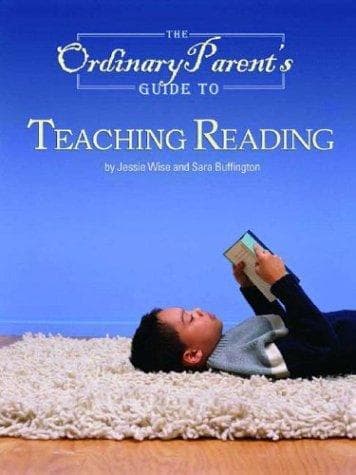
The Ordinary Parent's Guide to Teaching Reading
A simple, scripted, phonics-first guide that walks any parent—no special training required—through teaching a child to read, from short vowels all the way to multisyllable words. Recommended for beginning readers in preschool through 2nd grade.

Scholastic 100 Words Kids Need to Read by 1st Grade
Sight word mastery workbook with engaging activities teaching the 100 most essential words for first-grade reading fluency.

Spectrum Phonics, Grade 2
Advanced phonics workbook covering vowel teams, r-controlled vowels, multisyllabic words, and reading fluency for second graders.

100 Write-and-Learn Sight Word Practice Pages
Practice 100 essential sight words through tracing, writing, word searches, and context activities for beginning readers.

School Zone Big Kindergarten Workbook
Comprehensive 320-page workbook with reading readiness, phonics, sight words, math, and science activities for kindergartners.

Spectrum Phonics Workbook, Grade 1
Systematic phonics practice for first graders covering consonant sounds, vowels, blends, digraphs, and word families.

School Zone Big Preschool Workbook
Award-winning 320-page workbook covering alphabet, phonics, numbers, shapes, colors, and early reading for preschoolers ages 3-5.

Bob Books Set 2: Advancing Beginners
Twelve sequenced early readers introducing consonant blends and longer words for advancing beginning readers ages 4-6.

Scholastic Sight Word Readers Parent Pack

Melissa & Doug See & Spell Learning Toy
Jolly Phonics Games CD
Enter the interactive world of Inky Mouse and her friends as they practise all of the five skills in Jolly Phonics. With 20 fun activities to explore, children will be able to practise and revise their own knowledge. Key features: Suitable for us...

Learn to Read - Levels 5&6 Complete: Transitional Readers
Designed to help your child learn the building blocks of reading.