Science
What is Science?
A K-12 science sequence usually moves from broad nature study and life science in the early grades, into earth and physical science in upper elementary, then into more structured biology, chemistry, and physics in middle and high school. The Next Generation Science Standards (NGSS) emphasize practices — asking questions, modeling, analyzing data, arguing from evidence — alongside the content itself.
Prerequisites scale with age. Early science needs only curiosity and observation skills. Middle school science leans on reading comprehension, basic math, and the ability to follow a multi-step procedure. High school chemistry and physics depend heavily on algebra; biology depends more on vocabulary and systems thinking. Strong math skills open up the upper grades; weak ones limit them.
How to Learn Science
The single biggest mistake is treating science as a reading subject. Kids need to do science — observe, ask questions, design simple investigations, collect data, and argue from it — not just read about other people doing it. For homeschoolers, that often means budgeting for a microscope, basic lab supplies, and field trips, and resisting the pull of all-worksheet curricula.
- Pair every topic with at least one hands-on investigation or observation, even a simple one
- Keep a science notebook from early on; sketching and labeling are real scientific skills
- Use citizen-science projects (eBird, iNaturalist, Zooniverse) for real-data practice
- In high school, don't skip the math — physics without algebra and chemistry without stoichiometry are watered-down versions of the actual subjects
- Progress looks like a kid who, faced with a new claim, asks how we'd know if it were true
Science Resources

DK Knowledge Encyclopedia Science!
A visually stunning DK reference covering matter, forces, energy, chemistry, life science, earth science, and space—an ideal hardcover spine or companion for homeschool science across the elementary and middle years.

National Geographic Kids 5,000 Awesome Facts (About Everything!)
Thousands of true, bite-sized facts about science, nature, space, animals, history, and geography in National Geographic Kids' bold photo-packed style—a curiosity-building enrichment book for a wide range of ages.

Janice VanCleave's 201 Awesome, Magical, Bizarre, & Incredible Experiments
201 safe, low-cost, hands-on science experiments across biology, chemistry, physics, earth science, and astronomy using common household materials—a long-running homeschool favorite for elementary and middle school.

Usborne 100 Science Experiments
100 simple, hands-on science experiments—crystals, circuits, balloon rockets, kaleidoscopes and more—with clear illustrated steps and explanations. A low-prep, household-materials activity book for elementary homeschoolers.

Everything You Need to Ace Science in One Big Fat Notebook
The Brain Quest team's wildly popular middle-school science study guide—notes, doodles, mnemonics, and quizzes covering the periodic table, forces, energy, space, earth science, and biology. A great homeschool supplement or review tool.

Evan-Moor Daily Science, Grade 5
Fifth-grade daily science workbook with weekly units on life, earth, and physical science featuring hands-on experiments and critical thinking exercises.

DK Smithsonian: The Science Book — Big Ideas Simply Explained
Comprehensive illustrated science reference covering key discoveries and concepts across physics, chemistry, biology, and earth science from ancient times to today.

Evan-Moor Daily Science, Grade 4
Fourth-grade daily science workbook covering life, earth, and physical science with hands-on activities and vocabulary building.
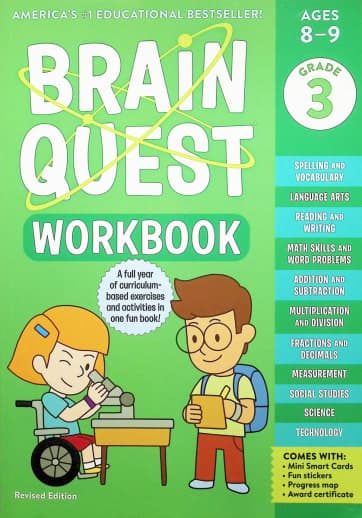
Brain Quest Workbook: Grade 3 (Revised Edition)
Comprehensive, curriculum-based workbook covering math, reading, writing, science, and social studies for 3rd graders with engaging, varied activities.
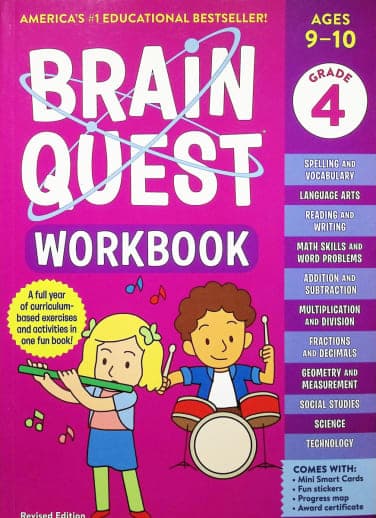
Brain Quest Workbook: Grade 4 (Revised Edition)
Comprehensive workbook for 4th graders with engaging activities in math, reading, writing, science, and social studies — part of the 45-million-copy Brain Quest series.

ThinkFun Gravity Maze Marble Run Logic Game
A STEM marble run and logic puzzle combined, challenging kids to build towers and solve 60 puzzles that teach spatial reasoning, planning, and engineering thinking.

Elenco Teach Tech Mech-5 Mechanical Coding Robot
A screen-free coding robot that teaches programming concepts through mechanical switches and gears, building computational thinking skills without any digital devices.