Physics
What is Physics?
Physics is the natural science that studies matter, its motion, and behavior through space and time, and that studies the related entities of energy and force. Physics is one of the most fundamental scientific disciplines, and its main goal is to understand how the universe behaves.
Physics is divided into two main branches: classical physics, which studies the behavior of matter and energy in the macroscopic world; and quantum physics, which studies the behavior of matter and energy in the microscopic world. Classical physics includes mechanics, heat, electricity and magnetism, light, and sound. Quantum physics includes atomic and subatomic physics, condensed matter physics, nuclear physics, and particle physics.
Physics is essential to the understanding of how the universe works. It has been integral to the development of essential technologies like the telephone, television, computer, and the Internet. Physics is also involved in important medical applications like MRI and CAT scans, and in the development of new materials and energy sources.
How to Learn Physics
Physics is a problem-solving subject, and the biggest mistake is treating it as facts to memorize. The goal is to understand a small number of powerful principles deeply enough to apply them to new situations. Start with mechanics (motion, forces, energy) because everything else builds on it.
Math is the language of physics, so keep your algebra and (for advanced work) trigonometry and calculus sharp — struggling with the math makes the physics feel harder than it is. Work lots of problems, and for each one draw a diagram, identify the principle, and reason before plugging in numbers. Pair the math with physical intuition through demonstrations and experiments; seeing a concept in action makes the equations meaningful. Understand each idea before moving on — physics is relentlessly cumulative.
Physics Resources

ThinkFun Gravity Maze Marble Run Logic Game
A STEM marble run and logic puzzle combined, challenging kids to build towers and solve 60 puzzles that teach spatial reasoning, planning, and engineering thinking.

Snap Circuits Classic SC-300 Electronics Kit
A hands-on electronics exploration kit with over 300 projects that teaches kids about circuits, electricity, and engineering through snap-together components.
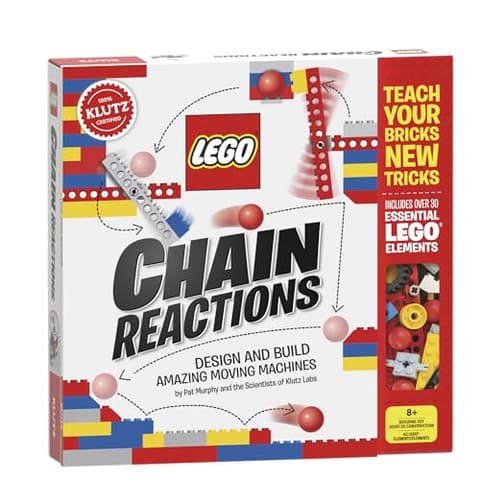
Klutz LEGO Chain Reactions Craft Kit
Arduino Science Kit Physics Lab
The Arduino Education Science Kit Physics Lab provides middle schoolers (ages 11 to 14) with a hands-on experience, enabling them to explore forces, motion, and conductivity with their classmates. Students can make their own hypothesis like a real s...
Physics for Every Kid: 101 Easy Experiments in Motion, Heat, Light, Machines, and Sound
How do magnets work? What makes a curve ball curve? What keeps an airplane in the air? How can a pulley make you five times stronger? Now you can learn the answers to these and other questions about basic physics through 101 fun, safe, low-cost exper...
The New Way Things Work
The information age is upon us, baffling us with thousands of complicated state-of-the-art technologies. To help make sense of the computer age, David Macaulay brings us The New Way Things Work. This completely updated and expanded edition describes...
College Physics
This introductory, algebra-based, two-semester college physics app is grounded with real-world examples, illustrations, and explanations to help students grasp key, fundamental physics concepts. Features: Study progress 34 Study units 282 Lesso...
Physics
College Physics meets standard scope and sequence requirements for a two-semester introductory algebra-based physics course. The text is grounded in real-world examples to help students grasp fundamental physics concepts. It requires knowledge of alg...
University Physics
University Physics is designed for the two- or three-semester calculus-based physics course. The text has been developed to meet the scope and sequence of most university physics courses and provides a foundation for a career in mathematics, science,...

Physics Lab Kit
This kits helps teachers in small schools or home schools overcome the challenges often experienced with science experiments. The innovative hands-on laboratory exercises were developed to be convenient for teachers while clearly teaching a scientifi...
Physics: Why Matter Matters!
Basher Science: Physics, Why Matter Matters! created and illustrated by Simon Basher, Written by Dan Green: Imagine physics as a community full of wacky characters--the building blocks of the universe each with a unique personality. This book throws...

Physics Matters Textbook
Physics Matters textbook is written in line with the 2013 GCE Ordinary Level Physics syllabus from the Ministry of Education, Singapore. Designed for effective concept development and reinforcement, this textbook presents Physics in an engaging manne...