Multiplication & Times Tables
What is Multiplication & Times Tables?
Multiplication is taught in two stages. First, the concept: a student learns that 4 × 3 means four groups of three, or three groups of four, or a 4-by-3 array, or three added to itself four times. All of these models matter because each one shows up in different word problems later. Second, the facts: the times tables through 10 (or 12) become automatic, so the student can pull 7 × 8 = 56 out of memory rather than computing it.
The conceptual introduction usually happens in 2nd grade through skip-counting, with formal multiplication starting in 3rd grade. Fluency with all the basic facts is a 3rd-grade target. Multi-digit multiplication, properties of operations, and the standard algorithm follow in 4th grade. Without solid facts, every subsequent topic — long division, fractions, ratios, algebra — runs slower than it should.
How to Learn Multiplication & Times Tables
Concept first, then drill. A student who memorizes the table without understanding what multiplication means will get tripped up by any word problem that asks them to recognize when to multiply. Use arrays drawn on graph paper, groups of pennies, or skip-counting on a number line until the meaning is obvious. Only then start the fluency work.
For the fluency stage, short and daily beats long and occasional:
- XtraMath, Reflex Math, or simple flashcards for five minutes a day
- Times Tales or songs for the tricky facts (6×7, 7×8, 8×9 trip up most kids)
- A printed times-table chart they can self-check against
- Skip-counting practice during transitions — walking to the car, brushing teeth
To check fluency, ask facts out of order and listen for hesitation. If your student counts up or pauses, the fact isn't automatic yet. Speed alone isn't the goal, but a 2-second response is the realistic bar.
Multiplication & Times Tables Resources
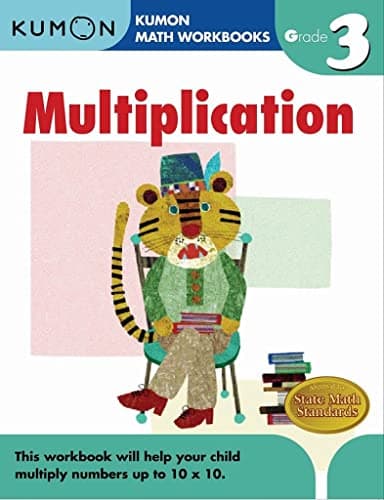
Kumon Grade 3 Multiplication
Kumon Method multiplication workbook for third graders building fact fluency from basic tables through multi-digit multiplication with incremental daily practice.
Saxon Math 5/4
A classic incremental math curriculum for grades 3-5 that builds mastery through daily practice, review, and gradual introduction of new concepts.
Multiplication Rock
Learning multiplication is exciting when you rock! Upbeat music, energetic performers, and colorful action make these multiplication songs effective with kids of all ages. Learners develop quick, accurate recall for facts 2 through 12. This DVD inclu...
Multiplication 0 to 12 Flash Cards
Set features 54 cards with two multiplication problems each, their answers on the opposite side.
Multiplication Rap
Everyone loves rapping along and learning multiplication with D.J. Doc Roc – the Hip Hop Hamster. Positive lyrics, fun music, and high-energy action make these multiplication rap video songs irresistible. Multiplication facts 2 through 12 are e...

Multiplication
Award winning educational materials like worksheets, games, lesson plans and activities designed to help kids succeed. Start for free now!...

Multiplication
Practice multiplication skills on IXL, have fun, and win awards!...

Math Charts
A free library of printable math reference charts: multiplication grids, times tables, hundreds and place value charts, and a 37-row fraction to decimal chart. PDF and PNG, no signup, no watermark.

MathBuilders
A free web app for short daily math-fact practice that tracks recall fact-by-fact and uses spaced repetition to resurface the facts a child misses — building addition, subtraction, and multiplication fluency in a few minutes a day, with no signup required to start.

Free Math Worksheets from Think Tank Scholar
Large selection of math worksheets including tables that can be used for quizzing/memorization
Learning Times Tables
ONLINE WEB TOOL No downloading, Continue everywhere directly. Information is automatically stored. QUICK LEARNING METHOD The program uses a color-overview to show how well sums are mastered. According to the overview certain sums are given more freq...
Timestables.com
Free, no-login multiplication drills and printable worksheets — a sharp single-purpose tool for daily times-tables practice in grades 1-5.