Addition
What is Addition?
Addition is introduced informally in preschool and kindergarten through combining groups of objects. First grade brings formal addition within 20, using strategies like counting on, making ten, and using doubles. Second grade extends to two- and three-digit addition with regrouping, building on a solid understanding of place value. By the end of 3rd grade, students should be fluent with multi-digit addition using the standard algorithm.
Addition is the prerequisite for everything: subtraction is just addition's inverse, multiplication is repeated addition, and every later operation assumes fluent recall of basic sums. Students who never reach automaticity — who still count on fingers in 4th grade for 8 + 7 — end up bottlenecked in every subsequent topic. The goal isn't speed for its own sake, but freeing up working memory for the actual problem being solved.
How to Learn Addition
The transition that matters most is from counting to knowing. A 1st grader counting on fingers for 6 + 3 is fine; a 3rd grader doing the same is a problem. Get there through strategies first, then drill — don't drill cold facts a kid doesn't have a way to think about.
Useful tools and approaches at the early stages:
- Ten frames and number bonds to teach making-ten strategies (8 + 5 as 8 + 2 + 3)
- Doubles and near-doubles facts (6 + 6, then 6 + 7) as early anchors
- Number lines for visualizing counting on and regrouping
- Short daily fact practice (XtraMath, flashcards) once the strategies are solid
For multi-digit addition, base-ten blocks make regrouping visible. If your student can do 47 + 38 mentally by breaking it into 40 + 30 + 7 + 8, they understand the operation. If they can only follow the column algorithm without being able to explain what carrying means, the place-value foundation needs more work.
Addition Resources
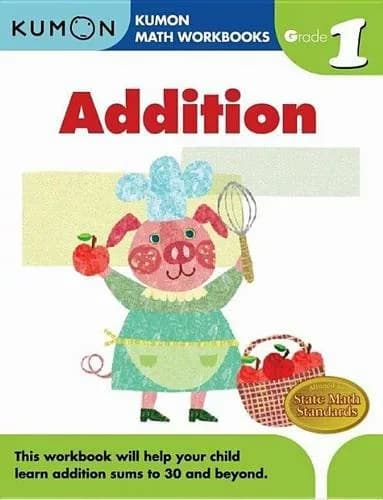
Kumon Grade 1 Addition
Step-by-step addition workbook for first graders using the Kumon method of incremental skill building. Covers adding 1 through 3-digit numbers.
Addition 0 to 12 Flash Cards
Set features 54 cards with two addition problems each, their answers on the opposite side.

Math Flash Cards
Learn math facts with a wide variety of flash cards and box sets for any math learning needs

Addition
Practice addition skills on IXL, have fun, and win awards!...

Addition
Award winning educational materials like worksheets, games, lesson plans and activities designed to help kids succeed. Start for free now!...
Addition Worksheets
Addition worksheets from addition facts and two-digit addition to column addition and addition with games. Topics: Math facts Five-minute frenzies Single-digit addition Multi-digit addition Column addition And more!...
2nd Grade Math Worksheets: Addition
Extensive practice is required to develop mastery in basic math skills; these worksheets span a wide range of grade 2 addition topics from adding single digit numbers to addition in columns with regrouping. Several different pdf worksheets are availa...

Free Math Worksheets from Think Tank Scholar
Large selection of math worksheets including tables that can be used for quizzing/memorization
Grade 1 Addition Worksheets
Free 1st grade addition worksheets. Adding with pictures, number lines, mental addition, number bonds, missing addends, adding whole tens, completing the next ten, adding in columns and much more. No login required....