The Best Homeschool Geography & World Cultures Curriculum for Every Age in 2026
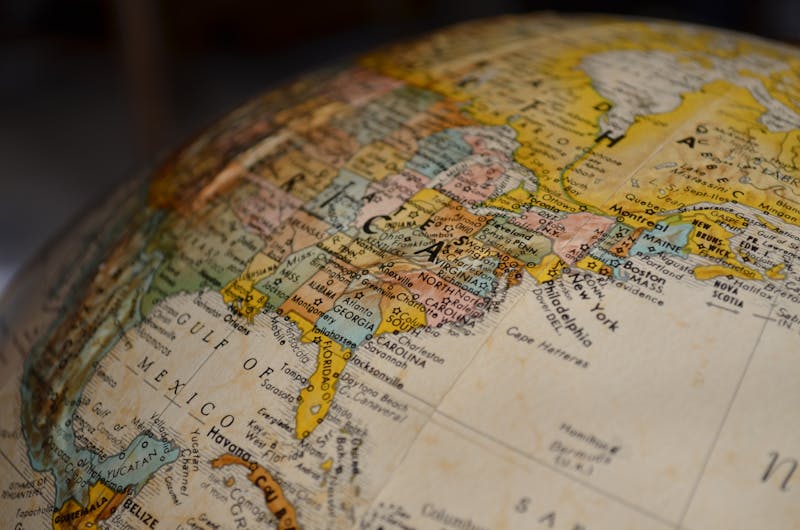
Geography is one of those subjects that touches everything — history, science, economics, language, and culture all come alive when students understand the world around them. For homeschooling families, geography offers a natural gateway to interdisciplinary learning, whether your kindergartner is learning the continents or your high schooler is preparing for AP Human Geography.
The best geography curriculum goes beyond memorizing capitals and coloring maps. It teaches spatial thinking, cultural awareness, and global citizenship — skills that matter more than ever in our connected world. Here is our guide to the best homeschool geography and world cultures resources available in 2026, organized by age group so you can find exactly what fits your learner.
Preschool and Kindergarten (Ages 3–6)
Young children are naturally curious about the wider world. At this age, geography is best taught through stories, songs, hands-on activities, and playful exploration rather than formal study.
Overwhelmed by all the options?
We built a grade-by-grade planner that shows you exactly what to cover — and which resources match your style.
Download the planner →Intellego K-2 Geography: Maps! introduces young learners to basic map skills with colorful, standards-aligned lessons that make spatial concepts accessible. Pair it with K-2 Geography: Continents and Cultures to explore the seven continents through stories and cultural highlights. Intellego courses are self-paced and work well for families who want structured lessons without overwhelming young learners.
For a multimedia approach, BrainPOP Jr. Social Studies covers communities, maps, and basic geography concepts with animated videos that hold young attention spans. The Continents of the World video from Homeschool Pop and Countries of the World from Kids TV 123 are free YouTube resources perfect for circle time or car rides.
For hands-on learners, National Geographic Kids World Atlas (6th Edition) is a beautifully illustrated reference that children can flip through independently. The photos and maps spark conversations about animals, landforms, and people around the globe — a great coffee-table book for curious families.
Elementary School (Grades 1–5)
Elementary is when geography skills start building in earnest. Students learn to read maps, understand physical and political geography, and begin connecting places to the people and cultures that live there.
My World Social Studies from Pearson Education provides a comprehensive K-6 social studies sequence that integrates geography throughout. The Foresman Social Studies series (available for Grade 2, Grade 3, Grade 4, Grade 5, and Grade 6) offers traditional textbook-style learning with maps, timelines, and review activities at each level.
If you prefer a more interactive approach, BrainPOP Geography uses animated videos, quizzes, and activities to cover physical geography, map skills, and world regions. BrainPOP is one of the most versatile supplementary tools in a homeschool toolkit — it covers social studies, U.S. history, and world history as well.
For game-based learning, Sheppard Software Geography offers free online map games covering U.S. Geography, Europe, Asia, South America, Oceania, and World Maps. These drag-and-drop games make memorizing countries, capitals, and physical features genuinely fun. MindSnacks U.S. Geography takes a similar gamified approach on mobile devices.
Intellego 3-5 Geography: The United States and 3-5 Geography: World Geography step up the complexity for upper elementary, introducing regions, climate zones, and human-environment interaction. These pair naturally with the 3-5 Civics: Constitutional Government unit for a well-rounded social studies experience.
Evan-Moor Social Studies Books provide excellent reproducible workbook pages that work as standalone geography units or supplements. Core Knowledge History and Geography integrates both subjects in a coherent, grade-by-grade sequence aligned with the Core Knowledge framework — completely free to download.
Mapping the World by Heart from FableVision Learning takes a unique approach: students literally learn to draw the entire world map from memory. It builds deep spatial understanding that no amount of worksheet-filling can match, and kids love the challenge.
Middle School (Grades 6–8)
Middle school geography shifts from basic map skills to understanding how geography shapes human societies — trade patterns, migration, urbanization, and environmental challenges. This is where geography becomes truly interdisciplinary.
myWorld Geography from Pearson Education is a comprehensive digital-first curriculum that covers world regions with interactive maps, primary sources, and project-based activities. HMH World Geography from Houghton Mifflin Harcourt is another full-year option with textbook rigor and strong visual resources.
AGS Globe World Geography from Pearson is designed for diverse learners, with simplified language and structured support that makes content accessible without sacrificing depth. It pairs well with AGS Globe World History for a two-year social studies sequence.
Intellego 6-8 Geography: The United States and 6-8 Civics: Constitutional Law provide standards-aligned courses that cover U.S. geography and government in depth. The Discovery Education Social Studies Techbook brings an inquiry-based approach with primary sources, interactive features, and built-in assessments.
For world cultures exploration, CuriosityStream History & Society documentaries provide stunning visual content about cultures, civilizations, and landscapes around the world. Pair these with DK Geography: A Visual Encyclopedia as a reference book students can browse independently.
The eTAP curriculum offers structured online courses for Grade 6, Grade 7, and Grade 8 social studies with built-in assessments and progress tracking. And iCivics, founded by former Supreme Court Justice Sandra Day O'Connor, uses games and interactive lessons to teach government and civic participation — an essential complement to geography at this level.
High School (Grades 9–12)
High school geography can satisfy social studies graduation requirements and prepare students for AP Human Geography or college-level coursework. At this level, students explore complex topics like geopolitics, economic geography, urbanization, and environmental sustainability.
American School Geography and World Geography from American School are accredited online courses that count toward a high school diploma. American School also offers Government, Civics, and Art 1: World Cultures for students who want to explore cultural perspectives through the arts.
For AP preparation, REA AP Geography All Access provides a comprehensive review with practice tests, while Khan Academy offers free American Civics content that complements geography study. The Wolfram World Geography Course Assistant serves as a quick-reference tool for country data, demographics, and economic statistics.
For government and civics — which intertwine closely with political geography — Magruder's American Government from Pearson remains the gold standard textbook. OpenStax American Government (2nd Edition) offers a free, college-quality alternative. Crash Course U.S. Government and Politics brings these concepts to life in fast-paced, entertaining video format.
Ben's Guide to the U.S. Government from the Government Publishing Office is a free, authoritative resource that explains how the federal government works — excellent for both civics requirements and understanding political geography.
Students interested in geospatial technology should check out Map Your World with GIS from UC Davis, a free online course that teaches Geographic Information Systems — a practical, career-relevant skill that brings modern geography into focus.
Free and Budget-Friendly Options
You do not need an expensive curriculum to teach geography well. Many of the best resources are completely free.
Sheppard Software offers extensive free geography games covering every continent and the entire world — perfect for daily practice. Core Knowledge History and Geography provides a complete, free K-8 sequence. WorldAtlas serves as a comprehensive free reference with maps, country profiles, and geographical data.
BrainPOP offers some free content (with a paid subscription for full access). iCivics is entirely free. Khan Academy provides free civics and government content. And the Education.com Social Studies worksheets offer free printable activities for younger learners.
For families on a budget, the DK Children's Encyclopedia and National Geographic Kids World Atlas are one-time purchases that serve as multi-year reference books. The Atlas of the Prehistoric World adds a fascinating geological dimension to geography study.
Seeing the World Through Data and Photographs
Most geography curricula teach students where places are. A smaller set of free tools does something harder and arguably more valuable — they teach students what places are actually like, and correct the outdated mental picture most of us carry around. These work beautifully as a supplement to any of the programs above, and they cost nothing.
Gapminder Tools turns two centuries of world development statistics into animated bubble charts. Every country is a bubble, and students can press play to watch nations move across the chart from 1800 to today. Either axis can be swapped for any of hundreds of indicators — child mortality, years of schooling, CO2 emissions, internet users — so a student can pose a question and immediately test it against real World Bank and UN data. Founded by the Swedish statistician Hans Rosling specifically to correct misconceptions about global development, it reliably surprises students who discover their idea of "developing countries" is decades out of date.
Its companion project Dollar Street makes the same point with photographs instead of numbers. Photographers documented the same everyday objects — front doors, beds, kitchens, stoves, toothbrushes, dinner — in over 300 homes across more than 50 countries, then arranged every home by monthly income rather than by nationality. Browsing a single row shows students that two families at similar income levels on opposite sides of the planet often live far more alike than two families from the same country at opposite ends of the income scale. It is one of the strongest world-cultures resources available at any price, and it needs no reading level to be useful.
Worldmapper approaches the same idea through cartography. Its several hundred free cartograms redraw the world map so each country is sized by a statistic rather than its land area — population, rainforest cover, carbon emissions, disease burden. Seeing an entire continent nearly vanish on an emissions map lands in a way that a paragraph of statistics never does, and it doubles as a natural introduction to how map design shapes perception.
For straightforward country research at an elementary reading level, Ducksters Geography is the reference a nine-year-old can actually use alone. Every country page follows an identical structure — flag, map, capital, population, major cities, currency, language, and a short readable overview — which makes it ideal as the backbone of a country-study unit or a weekly "country of the week" routine. It also includes flag galleries, continent maps, and geography quizzes.
How to Choose the Right Geography Curriculum
When selecting a geography curriculum, consider your family's teaching style and your student's learning preferences. Textbook-based approaches like Pearson's Foresman series work well for families who want structured, sequential learning. Interactive platforms like BrainPOP and Sheppard Software suit visual and kinesthetic learners. Unit-study families can build rich geography experiences around world history, environmental science, or ancient civilizations topics, using geography as the connecting thread.
Whatever approach you choose, the key is to make geography feel relevant. Connect map skills to real travel planning, discuss current events through a geographical lens, and explore cultural traditions through food, music, and art. Geography is not just a school subject — it is a way of understanding our world.
Browse all of our geography resources, social studies curriculum, and civics materials to find the perfect fit for your family. You can also explore resources by grade level or check out our guides to the best history curriculum, best science curriculum, and best free resources for 2026.
Learnamic Weekly Picks
Get handpicked learning resources, curriculum comparisons, and money-saving finds delivered to your inbox every week. Join thousands of homeschool families.
No spam, ever. Unsubscribe anytime.