Mathematical Reasoning
What is Mathematical Reasoning?
Mathematical reasoning is the skill of arguing carefully with numbers, shapes, and structures — figuring out whether a claim is true, why it's true, and how to convince someone else. It includes pattern recognition, logical deduction, proof writing, problem decomposition, and the willingness to sit with a problem you don't immediately know how to solve.
It isn't usually a standalone course in K-12. It shows up most explicitly in geometry (two-column proofs), in any discrete math or logic unit, and in problem-solving programs like Beast Academy, Art of Problem Solving, or math olympiad clubs. But it should be threaded through every math year from kindergarten on — a kid who only ever practices procedures will eventually hit a wall in algebra or calculus where reasoning is what's actually being tested.
How to Learn Mathematical Reasoning
The biggest mistake parents make here is treating reasoning like a separate, optional subject. It isn't. A kid builds reasoning by being asked, every week, to explain why something works, not just to get the answer. That can happen inside any curriculum if a parent makes the room for it.
What tends to work:
- Problem-of-the-week sites and contest archives (Math Olympiads for Elementary and Middle School, AMC archives, Beast Academy puzzles). One hard problem a week beats ten easy ones a day.
- Explain-out-loud time. Whenever a kid finishes a problem, ask them to walk you through why their approach works. If they can't, they haven't actually learned it.
- Books like Polya's How to Solve It (for parents) or the Art of Problem Solving texts (for strong middle schoolers) build vocabulary for the moves good problem-solvers make.
Gut-check: hand your kid a problem they don't immediately know how to start. Do they try something, get stuck, try something else? Or do they freeze and ask for help? The first one is a reasoner. The second one needs more reps in low-stakes settings before the habit takes hold.
Mathematical Reasoning Resources
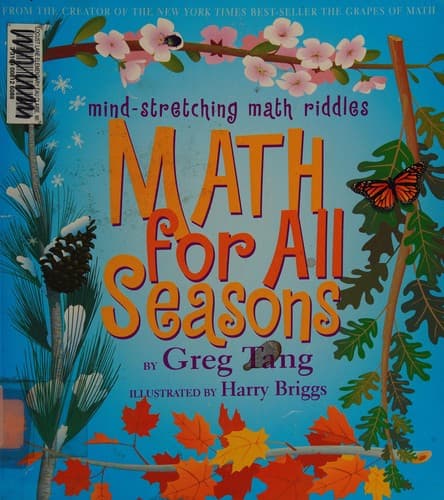
Math for All Seasons
A beautifully illustrated picture book of seasonal math riddles that teach children creative grouping and mental math strategies.
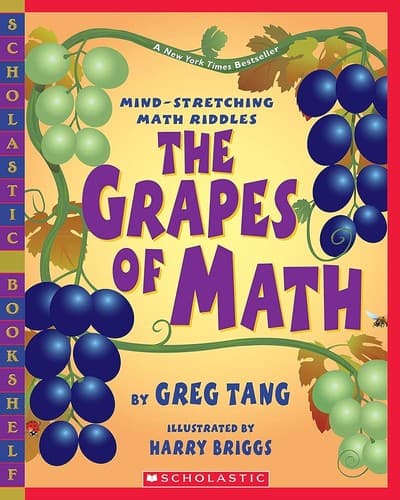
The Grapes of Math
A beautifully illustrated picture book that teaches creative mental math strategies through rhyming riddles and visual puzzles.
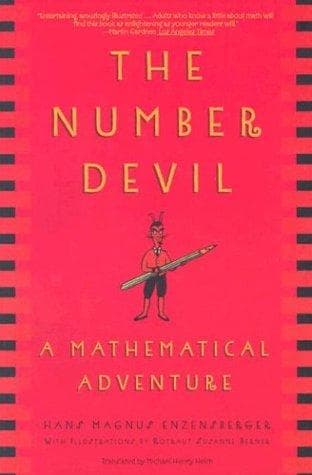
The Number Devil: A Mathematical Adventure
A captivating novel where a boy who hates math meets a number devil in his dreams, discovering the beauty of prime numbers, Fibonacci sequences, and other mathematical wonders.
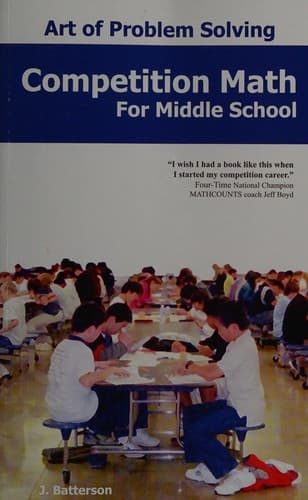
Beast Academy Guide 3A
A challenging and fun comic-book style math curriculum from Art of Problem Solving, designed to develop deep mathematical thinking in elementary students.

Mathigon
Free, award-winning interactive math courses and Polypad virtual manipulatives that adapt to each learner — from fractions to geometry.

MA111: Introduction to Mathematical Reasoning
The main purpose of this course is to bridge the gap between introductory mathematics courses in algebra, linear algebra, and calculus on one hand and advanced courses like mathematical analysis and abstract algebra, on the other hand, which typicall...

Math Practice Games
Large collection of free online math games to practice math facts and logic such as sudoku, Make 15, and Color 21....