The Best Homeschool Music Curriculum & Lessons for Every Age in 2026
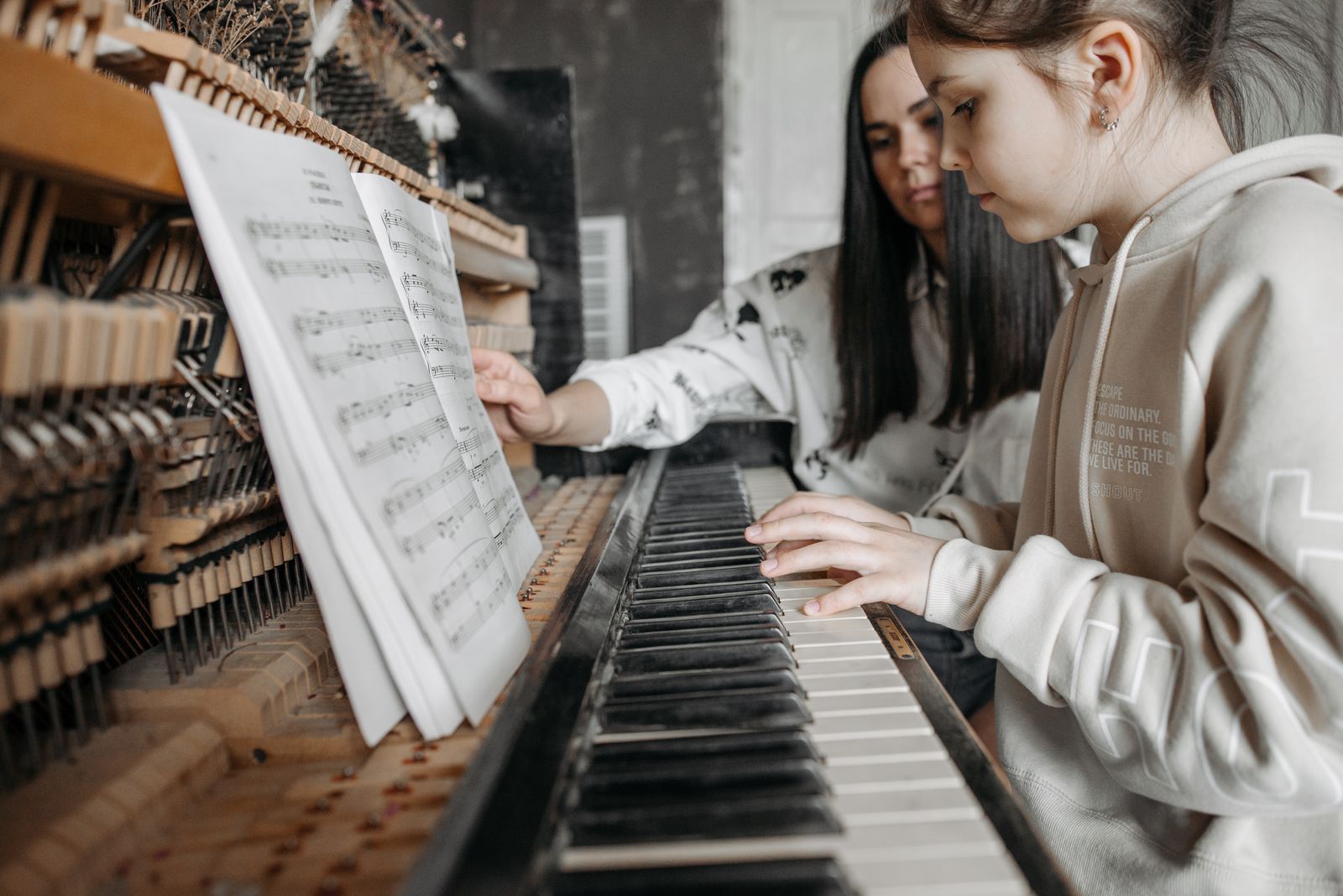
Music is the subject homeschoolers most often mean to get to and most often postpone. It rarely appears on a state's required list, it does not show up on a standardized test, and unlike math or reading there is no obvious penalty for skipping a year. So it slides. Then a child turns eleven, asks for a guitar, and the family discovers it has no idea where to start or what any of it should cost.
That is a shame, because music is one of the few subjects where a homeschool has a genuine structural advantage. Practice works best in short daily doses at unpredictable times of day, which is exactly what a home schedule can absorb and a school timetable cannot. A child can practice at 7am or after dinner. A ten minute session before lunch is not a scheduling problem. And the best beginner instruction in the world is now free on the open web, taught by people who are demonstrably excellent at it.
This guide walks through the best homeschool music curriculum and lessons for 2026, organized by age and by instrument, with an honest split between the free options that are genuinely good enough to build a year on and the paid programs that are worth the money. As with our guides to art and physical education, the goal is a real subject with real progress, not an enrichment box you tick once a semester.
Overwhelmed by all the options?
We built a grade-by-grade planner that shows you exactly what to cover — and which resources match your style.
Download the planner →What Music Study Actually Consists Of
It helps to know that "music" is really four separable things, and you do not have to do all four at once:
Ear and rhythm. Hearing high and low, fast and slow, steady beat, matching pitch with the voice. This is the foundation, it costs nothing, and it belongs in the preschool and early elementary years.
An instrument. The physical skill of producing sound on something. This is the part that requires daily repetition and the part most families think of as "music lessons."
Notation and theory. Reading the written language of music and understanding why chords and keys behave as they do. This is the part with the most excellent free material available, and the part most easily taught by a parent who does not play.
Listening and history. Knowing what an orchestra sounds like, who Bach was, why a blues progression feels the way it does. Cheap, pleasant, and easy to fold into a car ride or a meal.
A strong homeschool music year usually runs two of these in parallel, most commonly an instrument plus theory, with listening as background. Trying to run all four formally is how families burn out by October.
Preschool and Kindergarten: Sound Before Symbols
For the youngest children, formal instruction is not just unnecessary, it is counterproductive. What a three year old needs is a great deal of singing, a steady beat to move to, and permission to make noise on things. Notation can wait several years without any cost.
The single best free tool at this age is Chrome Music Lab, Google's set of browser experiments covering rhythm, melody, spectrogram, chords and arpeggios. It requires no account, runs on any device, and a four year old can operate it without reading. It is also genuinely useful right through elementary school, which is rare for a free toy. 123 Kids Fun Music covers similar ground as a dedicated preschool app.
Picture books do a surprising amount of work here. Zin! Zin! Zin! A Violin introduces the instruments of the orchestra one at a time by building up an ensemble, and M is for Melody: A Music Alphabet gives young children the vocabulary before the notation. Both are read-aloud material, not curriculum, and that is the point at this age.
If you want an instrument in the house for a two to five year old, keep expectations honest: the goal is familiarity, not technique. A cheap keyboard that a child can bang on without anyone wincing does more for long term musicianship than a good instrument they are told to be careful with.
Elementary: The First Real Instrument
Somewhere between six and nine most children are ready for an instrument with actual instruction attached. Piano is the usual and defensible default, because the layout makes music theory visible in a way no other instrument does. On a piano the distance between notes is something you can see, which pays off for the rest of a musician's life regardless of what they eventually play.
The standout free option is Hoffman Academy, which teaches piano to children through short structured video lessons and is one of the genuinely remarkable free education resources on the internet. Joseph Hoffman teaches in a way that assumes a child audience without talking down to them, the sequence is coherent rather than a pile of unconnected videos, and the free tier covers real ground before any paid upgrade becomes relevant. For many homeschool families this alone is a complete elementary music program.
For families who want a physical, homeschool-specific package, Home School Piano is built explicitly around a homeschooling household with multiple children on one subscription. Learn & Master Piano with Will Barrow, Homeschool Edition is the more substantial commitment, a full DVD and workbook course with a homeschool edition priced for a family rather than a single student.
For a child who wants to play rather than study, Piano-K, the Self-Teaching Piano Game for Kids and the PiAnimals piano worksheets turn the early stages into something closer to a game. Both work best alongside a real sequence rather than instead of one.
Do not overlook the recorder. It is mocked, it is cheap, and it works: PlayByFingering is a free tool for recorder, ocarina and tin whistle that gets a seven year old playing recognizable songs quickly. A child who can already play something has a much easier time picking up a harder instrument later.
Middle School: Add the Theory
Middle school is where notation and theory stop being optional. A student who can play but cannot read is capped, and eleven to fourteen is the age where the abstraction becomes easy rather than painful. This is also the point where study skills start to matter for music, because progress now depends on structured practice rather than enthusiasm.
The free theory material here is better than most paid material. musictheory.net is the reference standard: clean lessons plus customizable drilling exercises on note reading, intervals, chords and key signatures, with no account and no cost. Teoria covers similar ground with a stronger emphasis on ear training, which is the half of theory most self-taught musicians neglect. Dave Conservatoire is a free, genuinely sequenced music school built by a British music teacher, and is the closest thing to a complete free theory curriculum.
Khan Academy's music basics and its broader music collection add listening and history alongside the theory, and slot easily into a family that already uses Khan for other subjects. Music Theory & Piano Lessons from the Furmanczyk Academy of Music links the theory back to the keyboard, which is the most efficient way to make it stick.
Twenty minutes of theory twice a week is enough at this age. It compounds quickly and it is the cheapest possible investment in a student's musical future.
The Guitar Track
Guitar is where the largest number of homeschool students actually want to end up, usually somewhere around twelve to fifteen, and it has by far the deepest free instruction available of any instrument.
JustinGuitar is the one to start with. Justin Sandercoe's free beginner course is structured as an actual graded curriculum rather than a video library, it has taught an enormous number of people to play, and there is no meaningful catch. If a student will follow one thing to completion, this is the thing. Marty Music is the best free complement, strong on learning specific songs, which is what keeps a teenager practicing between structured lessons. Marty's paid Beginning Fingerstyle and Classic Rock collections extend the same teaching into focused courses.
Other strong free options: Guitar Compass, Learning Guitar Now for blues, David Wallimann for a more musical and less mechanical approach, and The Next Level Guitar.
On the paid side, Gibson's Learn & Master Guitar, Homeschool Edition is the serious option for a family that wants a boxed, complete, gradeable course with a homeschool license. Fender Play is the low-commitment subscription. Rocksmith deserves a specific mention: it plugs a real guitar into a game console and is the single most effective tool we know of for a student who will not practice out of duty but will practice to beat a level.
For reference material, the pocket chord books are cheap and durable: Guitar Chords and later Advanced Guitar Chords. When a student is ready to understand what they are playing, The Practical Guide to Modern Music Theory for Guitarists and The Circle of Fifths for Guitarists are the natural bridge from music theory into the fretboard. The First 100 Chords for Guitar is a good structured beginner method in book form.
The Piano and Keyboard Track for Older Students
A teenager starting piano from scratch is a different student from a seven year old, and the adult-oriented methods suit them better than the children's ones. Alfred's Self-Teaching Adult Piano Course and Alfred's Adult All-In-One Course are the standard, long-proven starting points, and they move faster than a children's method because they assume the student can read and reason.
Free video instruction for this age includes HDpiano, which teaches popular songs with a split-screen keyboard view, and Alison Sparrow's 40-lesson piano sequence. Pianu turns the browser into an interactive keyboard trainer that gives immediate feedback, which solves the biggest problem of learning without a teacher.
Once the basics are in place, Piano Scales, Chords & Arpeggios is the practical technique book, and Piano & Keyboard Chords is the reference to keep on the music stand. For a student heading toward synthesis and production rather than classical repertoire, Stuff! Good Synth Players Should Know is the right next book.
Strings and the Suzuki Route
Violin and the other orchestral strings are the hardest instruments to self-teach, because intonation has no frets to catch your mistakes and bad habits set physically. This is the one area where we would genuinely recommend finding a human teacher, even a fortnightly one, rather than relying on video.
If you are going ahead at home anyway, the Suzuki books are the standard sequence and are designed around a parent participating alongside the child: Suzuki Violin School, Vol. 1, with parallel volumes for piano and guitar. Essential Elements for Strings is the alternative and is what most school orchestra programs use, which matters if your student might join a co-op ensemble or youth orchestra later. Alison Sparrow's free 20-lesson violin course is a reasonable free starting point to find out whether the interest is real before spending money.
High School: Making It Count
For high school, music can be a legitimate transcript credit, and it is worth planning it as one rather than recording whatever happened. A defensible one-credit music course is roughly 120 to 150 hours and usually combines an instrument, a theory component, and some listening or history.
The theory component is where free university material shines. Fundamentals of Music Theory from the University of Edinburgh is a full free course with real rigor, and Basic Concepts of Music Theory from the University of Wisconsin-Madison works as audio for a commute. Both are the kind of thing that reads well on a transcript and, more importantly, actually teaches the material. For a student going deep, A History of Western Music is the standard undergraduate survey text.
Music production is worth taking seriously as a high school path, because it connects to computer science and to real employment in a way traditional performance does not. Berklee offers Pro Tools Basics and Creating Synthesizer Sounds for Electronic Music free, which is an extraordinary thing to be able to say about Berklee. Music Theory for Computer Musicians is the book that translates conventional theory for someone working in a DAW rather than on a stave.
For students who want the hands-on electronics angle, the CircuitMess Synthia synthesizer kit and Jay-D DJ mixer kit are build-it-yourself projects that sit neatly between music and science. Music and Social Action from Yale is a free course that gives a humanities-shaped student something to write about.
Building an Actual Year
A workable plan for most families looks like this. Pick one instrument and stay with it for a full year before allowing a switch, because the first six months are the least rewarding part of any instrument and a student who switches every time it gets hard never gets past it. Practice short and daily rather than long and weekly: fifteen minutes five days a week beats an hour on Saturday, and this is the single most reliable predictor of whether a child keeps playing.
Add theory as a separate short slot twice a week, using musictheory.net or Dave Conservatoire. Keep listening completely informal. Then find an audience, whether that is a co-op recital, a church, grandparents on a video call, or a family performance night, because playing for someone else is what converts practice into motivation.
On budget: it is entirely possible to run a serious music year for the cost of the instrument alone. Hoffman Academy, JustinGuitar, musictheory.net, Teoria, Dave Conservatoire, Chrome Music Lab and the Berklee courses are all free, and together they cover preschool through high school. Spend your money on the instrument and, if you can, on occasional time with a real teacher. That order matters more than any curriculum choice.
Where to Start
If your children are under six, start with Chrome Music Lab and singing, and do not buy a curriculum. If you have an elementary-aged child, start Hoffman Academy this week; it is free and it is sequenced. If you have a teenager who wants to play guitar, start JustinGuitar and add musictheory.net twice a week. If you need a boxed, gradeable, transcript-friendly course, look at the Legacy Learning homeschool editions for guitar and piano.
You can browse everything we have collected by instrument and level under music, piano and keyboards, guitar, music theory and violin, or see how music fits alongside the rest of a plan in our guides to art and music, all-in-one curricula and high school planning. And if you are still assembling the rest of the year, our roundup of the best free homeschool resources is the place to go next.
Learnamic Weekly Picks
Get handpicked learning resources, curriculum comparisons, and money-saving finds delivered to your inbox every week. Join thousands of homeschool families.
No spam, ever. Unsubscribe anytime.