Logic
What is Logic?
Logic is the study of correct reasoning. More formally, it is the study of the principles of correct reasoning. The principles of correct reasoning can be applied to every day life to help make better decisions. They can also be applied to more complex problems in mathematics and philosophy.
Logic is often divided into two areas, inductive reasoning and deductive reasoning. Inductive reasoning is based on the idea that if something is true in a certain cases, then it is probably true in all cases. Deductive reasoning is based on the idea that if something is true in all cases, then it is probably true in a certain case.
Logic is the foundation for critical thinking, and develops the ability to think in a clear and ordered manner, to identify valid and invalid arguments, and to evaluate arguments and their underlying assumptions. Logic is also a useful tool for analyzing and solving problems.
Logic Resources
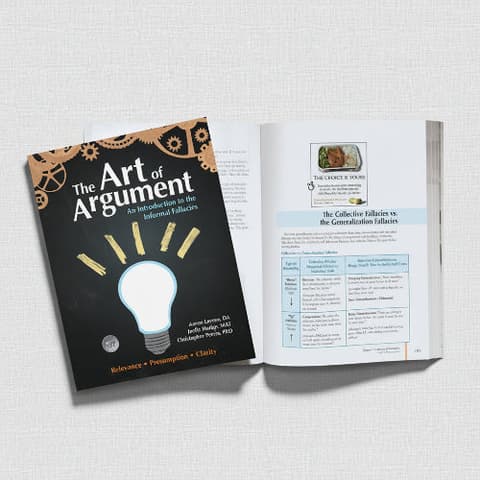
The Art of Argument: An Introduction to the Informal Fallacies (Revised Edition)
A best-selling middle-school logic course from Classical Academic Press that teaches 28 informal fallacies through vivid examples, mock advertisements, and engaging discussion.

The Thinking Toolbox: Thirty-Five Lessons That Will Build Your Reasoning Skills
A friendly, comic-illustrated follow-up to The Fallacy Detective, with 35 hands-on lessons and activities that teach practical reasoning, evidence, and problem-solving for ages 13 and up.
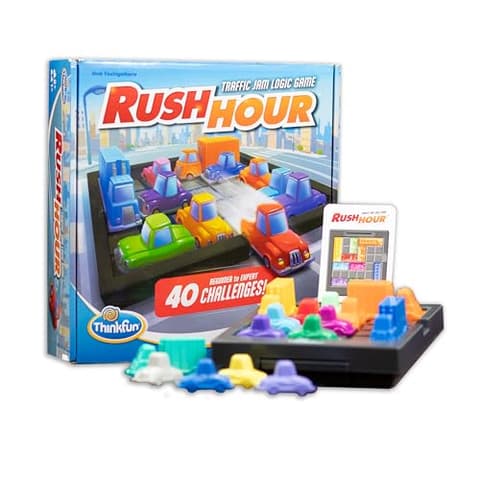
ThinkFun Rush Hour Traffic Jam Logic Game
SET: The Family Game of Visual Perception
Race to find as many SETs as you can—the player with the most SETs at the end of the game wins! Play SET solo or with as many people as you can fit around the table! It's perfect for travel, parties or as a quick after-dinner game. Fast-m...

Genius Kit
Osmo's groundbreaking system fosters social intelligence and creative thinking by opening up the iPad and iPhone to the endless possibilities of physical play....
SET Mania
Challenge yourself with six addictive game play options: Classic, Puzzle, Sprint, Marathon, Arcade and Rediscovery. SET Mania includes an interactive tutorial that makes it easy to learn. The goal is to find all the SETs as quickly as possible. A SE...
The Fallacy Detective: Thirty-Eight Lessons on How to Recognize Bad Reasoning
What is a fallacy? A fallacy is an error in logic a place where someone has made a mistake in his thinking. This is a handy book for learning to spot common errors in reasoning. For ages twelve through adult. Fun to use -- learn skills you can us...

Easy Puzzle Maker
Eight free browser-based puzzle generators: word search, crossword, word scramble, maze, sudoku, handwriting sheets, bingo and flash cards. Print-ready PDFs with answer keys, no account, no watermark.

ChessWize Chess Academy
Live online chess coaching for ages 5 to 15 with FIDE-rated coaches, a structured beginner to advanced curriculum, and weekly parent reports. Free 30 minute level check, then sessions from 375 rupees.

Non-trivial Crosswords
A weekly family crossword. Every Sunday puzzle is free to play in the browser, print as a PDF, or open in a crossword app. Real American-style grids without the obscure trivia adult puzzles assume.
Mindware: Critical Thinking for the Information Age
A free Coursera course from the University of Michigan, based on Richard Nisbett’s work, that teaches powerful ideas from psychology, statistics, and logic for reasoning better about everyday life.
Think Again: How to Reason and Argue
A free, beginner-friendly Coursera course from Duke University that teaches how to identify, analyze, and evaluate arguments — and how to reason and argue more carefully in everyday life.