Advertisement
The Art of Argument: An Introduction to the Informal Fallacies (Revised Edition)
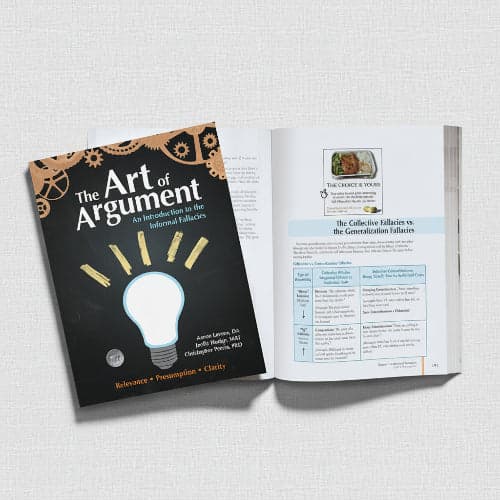
The Art of Argument is the award-winning informal logic course from Classical Academic Press, and a mainstay of the classical homeschool "logic stage." Written for students in roughly grades 7 through 9, it teaches the 28 most common informal fallacies — including the straw man, ad hominem, begging the question, the red herring, and the appeal to fear — and trains students to detect and avoid each one in real-world argument, advertising, and media.
What sets the program apart is how engaging it makes a subject that can feel dry. Each fallacy is introduced with clear definitions and memorable examples, then brought to life through mock advertisements, dialogues, and discussion questions that ask students to identify the faulty reasoning at work. The Socratic, discussion-friendly format encourages real conversation between parent and student rather than silent worksheet-filling, and the revised edition refreshes the examples and design while preserving everything that made the original a best seller for two decades.
The student text works on its own, and an accompanying teacher's edition (sold separately) provides answers and teaching notes for parents who want extra support. Most families spread it across a single school year, one fallacy or section at a time, often pairing it with a reasoning-skills book like The Thinking Toolbox or The Fallacy Detective. By the end, students have an essential, lifelong framework for filtering good reasoning from bad — a foundation that pays off in writing, debate, reading, and everyday decision-making.
As an Amazon Associate, Learnamic earns from qualifying purchases.
Reviews
What homeschoolers say
Homeschoolers appreciate The Art of Argument for its clear, engaging approach to teaching informal fallacies, often highlighting its vivid examples and accessible style for middle-school students. Many find it effective for developing critical thinking skills and enjoy the mock advertisements as memorable teaching tools. However, some note that the workbook can be repetitive and that the teacher's guide may lack depth for those unfamiliar with logic instruction. Overall, it is valued as a solid introduction to informal logic with some room for improvement in pacing and supplemental guidance.
Summarized by Learnamic from public homeschool reviews and discussions.
No member reviews yet — be the first to add yours above.
You Might Also Like
Are you the provider of this resource? Claim this listing to update your information, add images, and connect with families searching for your product. Learn more →