US Geography
What is US Geography?
A complete US geography sequence covers physical geography (mountains, rivers, plains, deserts, coasts, climate), political geography (states, capitals, regions, territories), and human geography (population centers, agriculture, industry, transportation). Most curricula spiral through it — kids might memorize states and capitals in 3rd grade, study regions in 4th or 5th, and tackle economic and human geography in middle school.
Prerequisites scale with depth. The basics need only map-reading and counting; deeper units benefit from some US history, comfort with charts and data, and the ability to read a thematic map. Works for kids roughly grades 3-8, with the ceiling depending on how much economics and current events you fold in.
How to Learn US Geography
Map work is non-negotiable. Blank-map drills for states, capitals, rivers, and mountain ranges build the spatial backbone everything else hangs on. Beyond memorization, organize the deeper learning around regions (Northeast, South, Midwest, Mountain West, Pacific, plus Alaska and Hawaii) and ask the same questions of each: what's the land like, what grows or gets made there, who lives there, and why.
- Use a road trip — real or planned on paper — to anchor regions and distances
- Pair physical maps with thematic ones: rainfall, population density, agriculture, electoral results
- Connect geography to current events; wildfires, hurricanes, and droughts make regional differences vivid
- Progress looks like a kid who can place all 50 states from memory, explain why major cities are where they are, and read a new thematic map without help
US Geography Resources
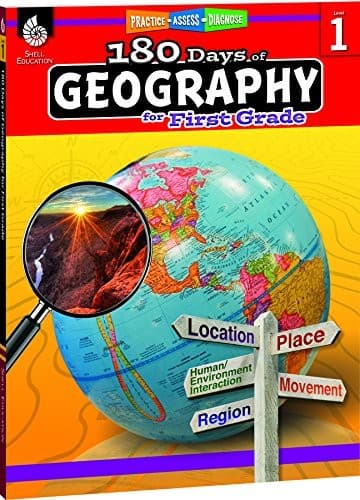
180 Days of Geography for Fourth Grade
Daily geography practice workbook with 180 lessons covering U.S. regions, map analysis, and geographic reasoning for Grade 4.
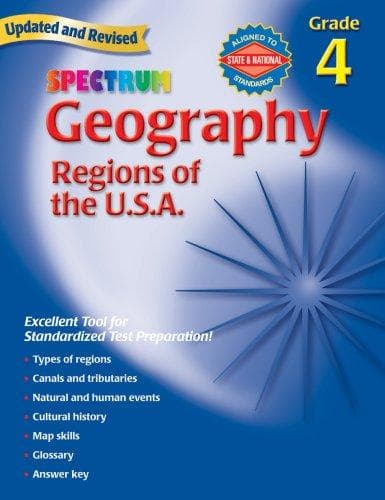
Spectrum Geography, Grade 4: Regions of the U.S.
Fourth-grade geography workbook covering U.S. regions with map activities, reading passages, and hands-on projects.
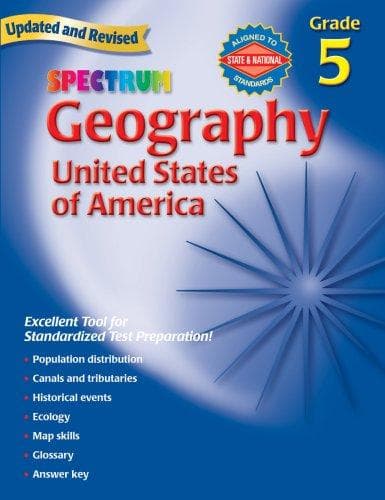
Spectrum Geography, Grade 5: United States of America
Fifth-grade geography workbook exploring U.S. states, capitals, landforms, and geographic themes through map activities.
Uncle Josh's Outline Map Book
Reproducible blank outline maps of continents, countries, and U.S. states for geography study and map drills.
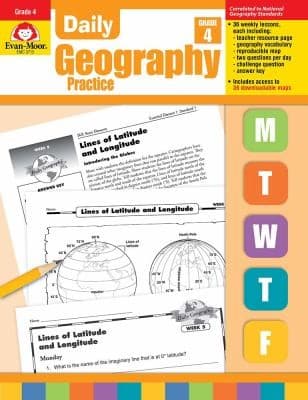
Evan-Moor Daily Geography Practice, Grade 4
Weekly geography units with daily map skills practice for fourth graders covering U.S. regions and world geography.

Seterra
Free online map quizzes that make memorizing countries, capitals, U.S. states, flags, and landforms genuinely fun through fast, replayable geography games.

United States Worksheets
Worksheets focusing on the US, its states, and state capitals....
United States of America
Detailed geographical data about the US including population, area, GDP, and much more, along with a summary of US history. Also features a set of maps, free political, physical and outline maps of the United States and maps of individual states. US...

K-2 Geography: Across the United States
K-2 Core Curriculum - Geography: Across the United States In this fun and interactive unit study, your children will explore the 50 states as well as geographic features of the United States! Our approach is to use board games, interactive onl...
US Geography
Play games and activities about the USA - landmarks, government, cities, states, and national parks....

3-5 Geography: The United States
3-5 Core Curriculum - Geography: The United States Take your children on a fascinating virtual tour of this amazing land called the United States. In this fun and interactive unit study, designed to meet and exceed state and national standards,...

6-8 Geography: The United States
6-8 Core Curriculum - Geography: The United States What is the geographical perspective? How does it influence how we learn and think about people, events, and places? This unique unit study offers an introduction to the geographical perspectiv...